In Koh Samui’s intense tropical monsoon climate, exterior paint plays a vital role in both protecting a building and enhancing its appearance. With temperatures ranging from 28–32°C, humidity often exceeding 80%, and constant exposure to salt-laden air, only certain types of paints are up to the task. Acrylic-based paints—particularly elastomeric formulations—offer durability, flexibility, and weather resistance, provided they are applied with proper preparation and technique.
Why Acrylic Paints Work in Tropical Conditions
Acrylic exterior paints are well-suited to Koh Samui’s coastal environment. Their water-based composition allows for breathability and expansion, reducing cracking and flaking on rendered or concrete surfaces. Unlike oil-based alternatives that harden, blister, and peel in high heat, acrylics remain flexible, accommodating the micro-movements common in tropical villas due to daily thermal shifts.
Elastomeric acrylic paints, capable of stretching 50–100%, are particularly effective on larger facades or hairline-prone surfaces. With a typical lifespan of 7–12 years under island conditions, they significantly outperform standard emulsions, which may degrade in 3–5 years. Price ranges from 300–1000 bht per litre, depending on formulation.
For homes near the coast—especially within 500 metres of the sea—specify paints rated for high salt spray resistance (ASTM B117, 2,000 hours or more). Low-VOC (volatile organic compound) acrylics emit less than 50 g/L, supporting healthier indoor environments and easier water-based clean-up, while reducing environmental impact compared to solvent-based paints.
Surface Preparation and Application
In Koh Samui’s climate, surface preparation is critical to paint longevity. Rendered or concrete walls must be fully cured (minimum 28 days) to avoid peeling due to high alkalinity. An alkali-resistant primer—typically 150–400 bht per litre—improves adhesion and shields against moisture intrusion.
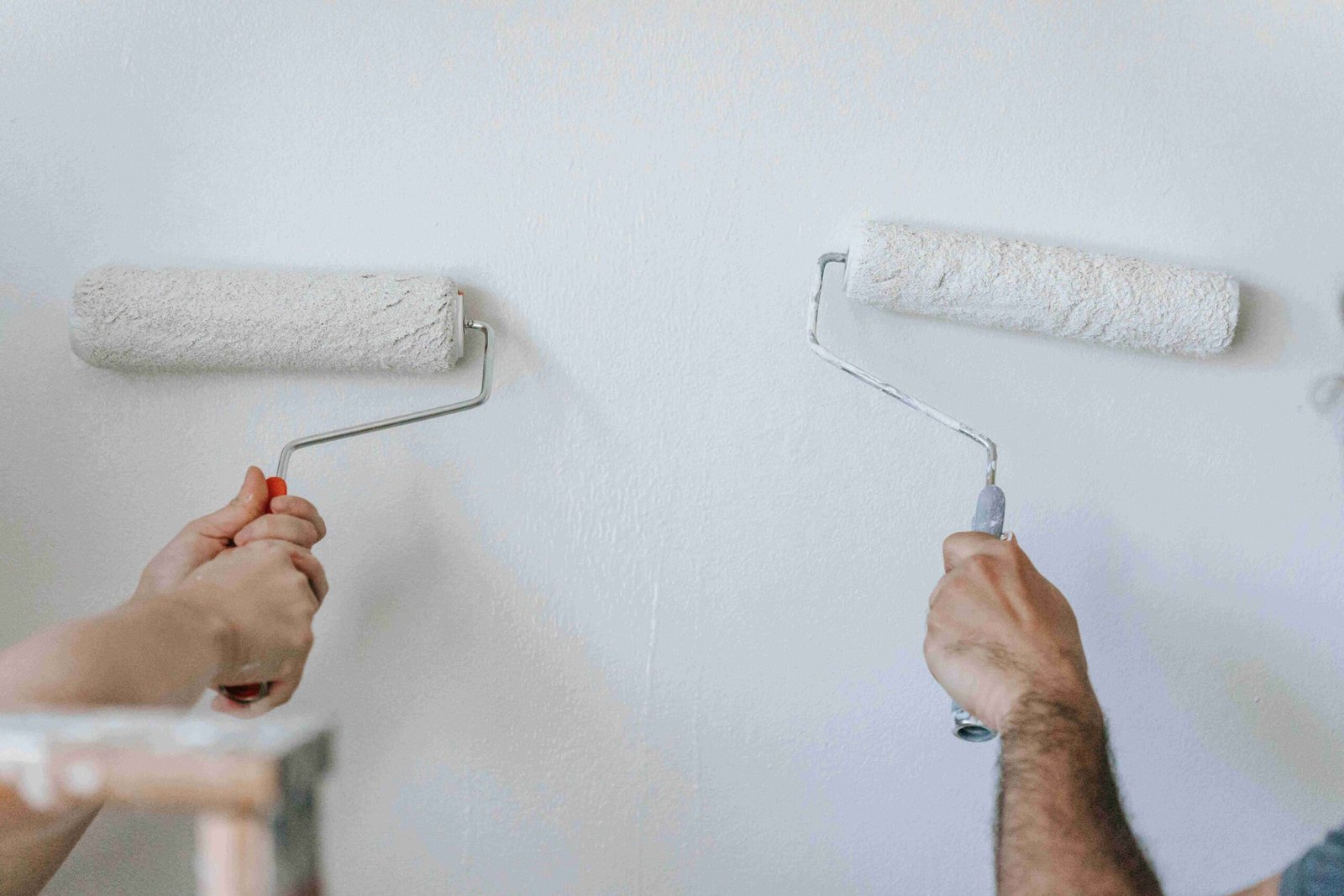
Two topcoats are standard, each applied at 100–150 microns dry film thickness (DFT). The myth of needing multi-millimetre coatings should be avoided, as correct application at micron levels is more effective and economical. Total system costs, including primer and labour, typically fall between 500–1000 per square metre.
Painting should be scheduled during cooler, dry periods—early morning is ideal—to prevent premature surface drying and blistering. High-gloss or dark tones require especially careful application, as Koh Samui’s high UV index (10–12) can amplify imperfections and accelerate fading. Regular maintenance, including biannual cleaning to remove salt and dust, can extend a coating’s effective lifespan by 20–30%.
Pro Tip: Always test paint samples on a shaded and sun-exposed section of the wall. Koh Samui’s intense light can alter perceived colour, and bold hues like red or blue may require UV-stable pigments to avoid rapid fading.
Alternatives and Comparative Options
- Oil-based paints tend to crack and yellow in tropical heat and require solvent-based clean-up—making them unsuitable for most Koh Samui applications.
- Silicone-enhanced paints offer superior water repellency but lower breathability, which may trap moisture if walls are not properly ventilated.
- Limewash is a breathable, traditional option that suits natural designs but fades quickly and needs frequent reapplication.
- Ceramic coatings last longer (10–15 years) and resist UV well, but are costly (£15–£25 per litre) and require specialised spraying equipment.
For most villa exteriors, elastomeric acrylics provide the best balance between cost, durability, and appearance. Compared to cladding systems like composite panels (1000–4000 bht /m²), paints are more affordable but require greater attention to detail in maintenance.
Conclusion
Acrylic-based paints—especially elastomeric types—offer a resilient, low-maintenance solution for protecting Koh Samui villas from sun, salt, and humidity. When paired with proper primers, applied under the right conditions, and maintained regularly, they deliver long-lasting finishes suited to tropical architecture.
For more tropical building advice, visit our blog or contact us to discuss your project.
Follow us on YouTube for great practical tips on designing and building for Koh Samui’s unique environment.