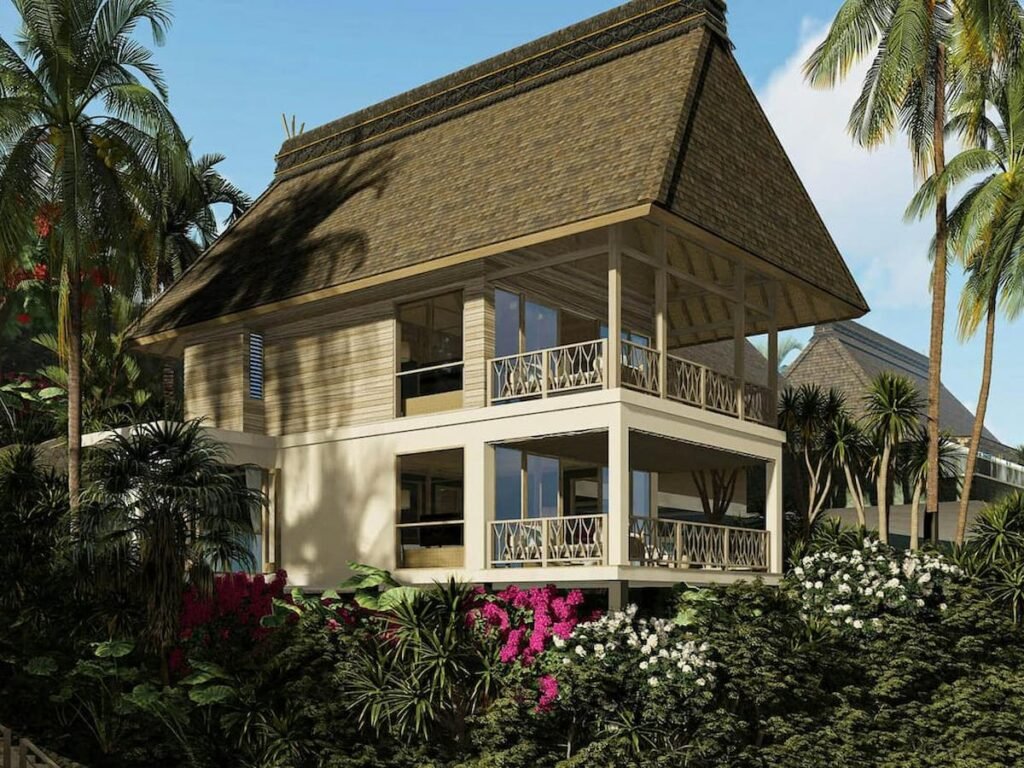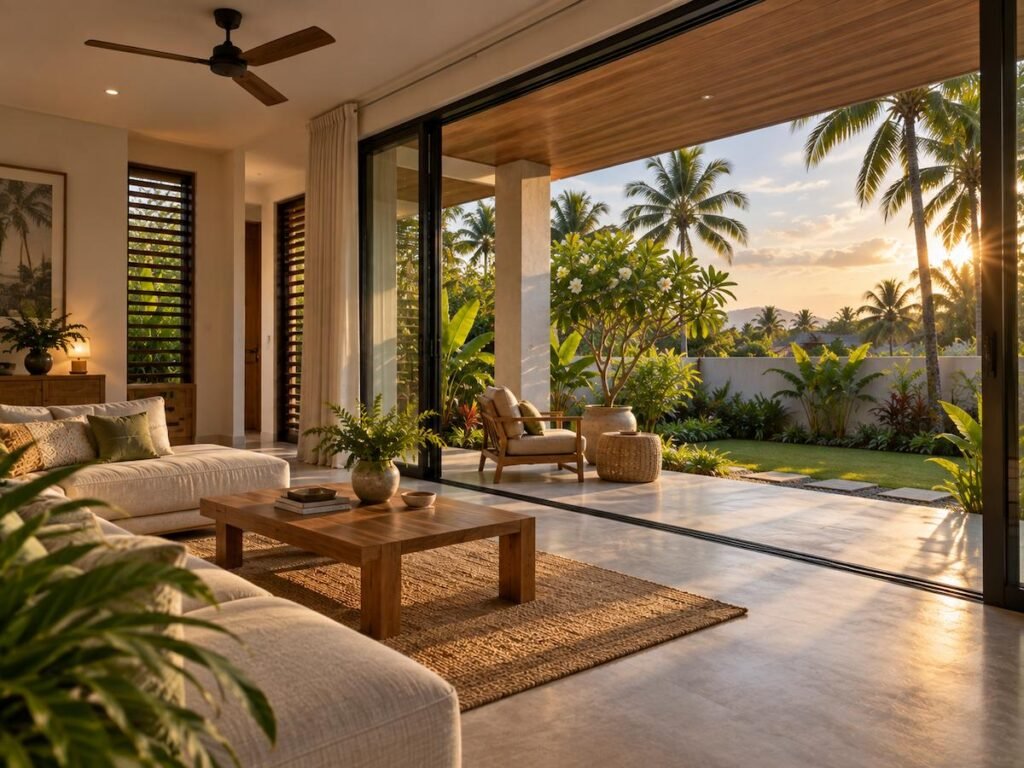
Why the calculus is different for buyers coming from Australia and New Zealand, and what to know before you commit.
We get a steady stream of enquiries from Australia and New Zealand, and after enough of these conversations a pattern becomes obvious: the questions an Australian or Kiwi buyer asks are consistently different from the questions we get from a European or North American client looking at the same plot. The travel logistics are different. The building culture is more familiar. The reasons for looking at Thailand in the first place tend to be more practical and less romantic. This guide is written specifically for that buyer.
It assumes you have already read our general introduction for prospective buyers and our guide to the four ways to acquire a home on Koh Samui, both of which apply to you exactly as they apply to a buyer from anywhere else in the world. What follows is the layer on top of that: the parts of the decision that genuinely differ if you are coming from Sydney, Melbourne, Brisbane, Perth, Auckland, or Wellington rather than London or Los Angeles.
The flight and time zone advantage
This is the most underrated part of the whole conversation, and the one buyers appreciate most once a project is actually under construction. Thailand sits close enough to Australia and New Zealand that neither the travel nor the working hours become an obstacle to a serious building project.
From the east coast of Australia, Bangkok is a single overnight or day flight away, with onward connections or a short domestic hop to Samui. From Perth, the flight time to Bangkok is shorter again, and the time difference is close to nothing: Perth and Thailand sit within an hour of each other for most of the year. Sydney, Melbourne, and Brisbane run two to three hours ahead of Thailand. Auckland and Wellington run five to six hours ahead. None of this compares to what a European client deals with (six to eight hours of offset, and a much longer flight) or what a client on the west coast of the United States deals with (a working day that barely overlaps with Thailand at all).
In practical terms, this means an Australian or New Zealand client can join a site visit, a design review, or a contractor call during a normal working morning, without the 3am calls that clients further afield often put up with. It also means the flight itself is manageable enough that owners visit more often during construction, which consistently correlates with fewer surprises at handover. We say this to every client regardless of nationality, but it is worth saying plainly here: the geographic convenience you have as an Australian or Kiwi buyer is a genuine, structural advantage over buyers from further away, not just a marketing line.
A climate and building culture that already feels familiar
Buyers from Queensland, northern New South Wales, and coastal New Zealand tend to arrive with an intuitive understanding of tropical and subtropical design that European clients often have to be talked through from first principles. Cross-ventilation, deep eaves, covered outdoor living, elevated floor levels, and a healthy respect for monsoon rainfall are not foreign concepts if you grew up with a Queenslander or a Bay of Islands bach. The instinct to live indoor-outdoor, with the boundary between the house and the garden treated as a design question rather than an afterthought, is one Australian and New Zealand clients usually bring with them rather than one we have to sell.
That familiarity is genuinely useful, but it is not a substitute for local knowledge. Samui’s building physics, material availability, contractor practices, and the specific implications of the monsoon season are their own subject, and a design sensibility that works on the Sunshine Coast will not automatically survive a wet season on a Samui hillside without proper engineering behind it. The advantage is that the conversation starts from a shared vocabulary. It still has to be finished by someone who has actually built here.
Ownership and cost, the honest version
There is no special ownership treaty between Thailand and Australia or New Zealand. As a buyer from either country, you sit under exactly the same rules as a buyer from anywhere else: freehold condominium ownership within the 49% foreign quota, or a registered 30-year leasehold structure for land and villas, as set out in our acquisition guide. Anyone telling an Australian or Kiwi buyer they have a special route into direct land ownership is wrong, and it is worth treating that claim as a warning sign about whoever is making it.
What we can say plainly, because we watch it happen client after client, is that the Australian dollar and the New Zealand dollar both tend to go a great deal further on a build in Thailand than they do on an equivalent project at home. We are not going to put a false-precision figure on that in AUD or NZD here, because currency movements and the scope of any given project change the number too much for a guide like this to be honest about it. What we will say is that it is worth doing the exercise properly, with a real Bill of Quantities rather than a rough per-square-metre guess, before you assume Thailand is either a bargain or a false economy. Most clients are pleasantly surprised. Some are not, usually because they under-scoped what they actually wanted.
One practical note specific to remitting funds from Australia or New Zealand: any money you bring into Thailand to buy a condominium unit needs to arrive as an inward foreign currency transfer, recorded at the receiving Thai bank as a Foreign Exchange Transaction. Get this wrong and you can create real problems for yourself at the point of registration. Your bank at home and your Thai lawyer both need to be told what the transfer is for before you send it, not after.
What we tell every Australian and Kiwi client before they commit
Engage a Thai property lawyer directly, not one recommended by the seller or the developer. This is true for every buyer, but Australians and New Zealanders, coming from countries with strong consumer protection and transparent land title systems, are sometimes the most caught out by how different the Thai system is under the surface.
Use the time zone advantage properly. If you are going to build here, plan to visit more than once, and use the manageable flight time and overlapping working hours to stay genuinely involved during design and construction rather than delegating everything and hoping for the best.
Bring your instinct for tropical living, but bring it as a starting point for a conversation with a local architect, not as a finished brief. The house that works on Samui is informed by, but not identical to, the house that works in Noosa or the Bay of Islands.
If you are weighing up Koh Samui specifically, our island overview and the individual area guides on this site are the right next step. If you already have a plot, or a project brief in mind, get in touch and we can talk through what it would actually take to build it.