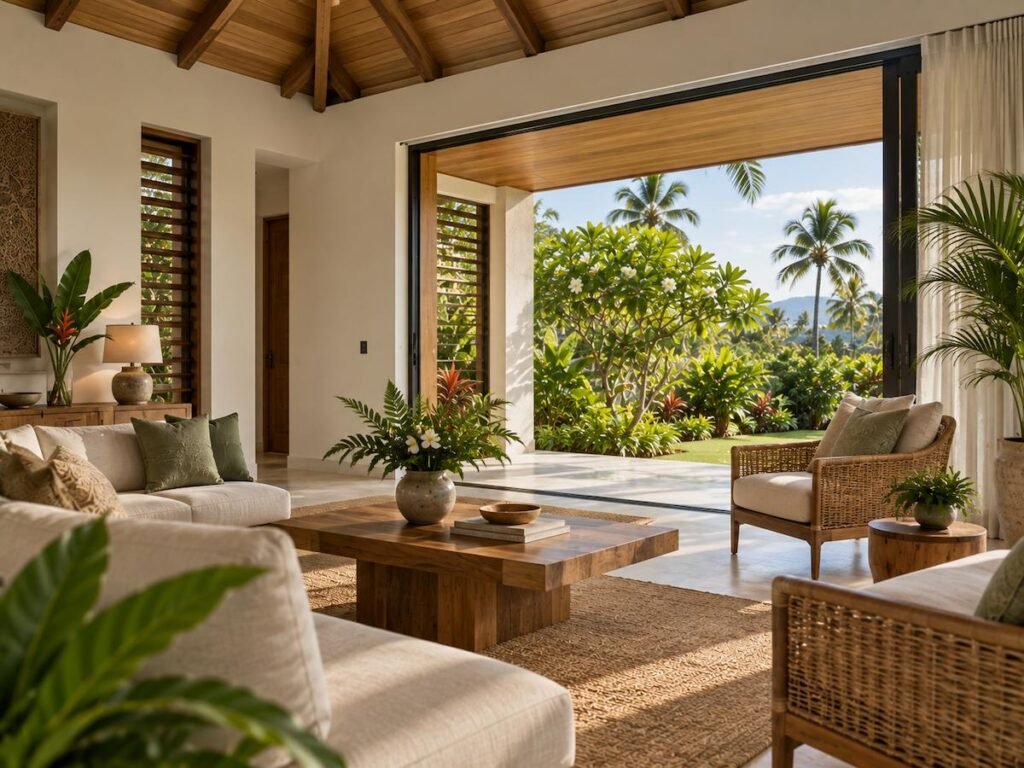
Koh Samui was just named the world’s best island for 2026, and it might well be the best place in the world to build a second home or retire to. It also might not be, unless you get a couple of things right first.
Koh Samui was named the world’s best island for 2026 in Travel + Leisure’s reader-voted World’s Best Awards, narrowly ahead of the Maldives. It’s a fair result, and it’s putting the island in front of a lot more UK buyers who might not have looked seriously before. This guide is for that buyer: the honest case for Samui, and the two things worth getting right before you commit to anything.
It assumes you have already read our general introduction for prospective buyers and our guide to the four ways to acquire a home on Koh Samui, both of which apply to you exactly as they apply to a buyer from anywhere else in the world. What follows is the layer on top of that: the parts of the picture that are specific to buyers coming from the UK.
The case for Samui
Building here goes further than the same budget would at home, largely because labour costs are a fraction of UK rates. Once you’re living here, the running costs stay low: water and electricity are cheap, VAT is 7% against 20% in the UK, and the sun is strong enough for solar to make a real dent in your electricity bill. The weather is warm and reliable for most of the year, on a beautiful tropical island, with diving, watersports, and easy access to the rest of Thailand when you want a change of scene. English is widely spoken, particularly in the areas UK buyers tend to settle in, which is not something every popular overseas market can say. And at a point when several well-known Spanish and southern European destinations are visibly tightening on foreign buyers and tourists, Samui and the wider island still treat you as welcome. Put together, that’s a strong case for Samui as a place to retire to or keep a second home — good value, a high standard of living, and a warm reception, not just warm weather.
None of that is a reason to skip the two things that actually catch people out.
Your options for actually having a home here
For most UK buyers, the standard route is straightforward: you own the villa itself outright, and lease the land it sits on for up to 30 years, registered at the Land Office. That’s the normal, legitimate path to a second home or a retirement base, and it’s the one our acquisition guide walks through in full.
If part of the plan is renting the villa out when you’re not using it, that’s also doable, but it needs the right structure rather than an assumption that it comes bundled in. A foreign-majority company renting property out as its main line of business generally needs a Foreign Business License to do so legally, and that license is genuinely hard to get when rental is the whole point of the company rather than a side activity. In practice, most owners who want rental income either work with a licensed villa management or rental company that handles bookings and guests under its own licensing, or structure ownership so the arrangement complies from day one. Either way, this is worth setting up properly with a Thai lawyer before you buy, not retrofitted afterwards once you find out the simple version doesn’t hold up.
Two things to get right so all of this actually works
The first is the lease term itself. Thirty years is the legal ceiling, not just the usual figure: under Section 540 of the Thai Civil and Commercial Code, no lease on land can be registered for longer, full stop. Some developers used to sell around this with “30+30+30” structures — a 30-year lease with two more 30-year renewals pre-signed on day one, marketed as a 90-year hold. In March 2025, Thailand’s Supreme Court ruled that kind of pre-agreed renewal void, because a promise of renewal made in advance is a personal arrangement between the original buyer and seller, not a registered property right — it doesn’t bind a future owner and can’t be locked in ahead of time. None of this makes a 30-year lease a bad structure; it’s the normal, workable route for a second home. It just means treating 30 years as the real number, and renewing on its own terms when the time actually comes, rather than banking on a promise made today.
The second is the nominee shortcut, and it’s worth being direct about this one: using a Thai company purely as a vehicle for a foreigner to control land was always illegal, not a legal grey area with acceptable risk. What has changed is enforcement — Thai authorities are actively investigating and unwinding these arrangements now, where in the past they were often waved through. If anyone offers you a company structure as a way to effectively own land as a foreigner, that is a real legal and financial risk, not a shortcut, and it needs independent legal advice before you go anywhere near it.
If you’re thinking about living here long-term
Thailand’s Long-Term Resident (LTR) visa allows qualifying property investment to count toward its financial threshold — currently USD 500,000 for the Wealthy Global Citizen category and USD 250,000 for Wealthy Pensioners, covering a villa purchase or build, or a leasehold with at least 10 years remaining (a standard 30-year lease taken out early comfortably clears that). So the home you’re already planning to build may do double duty toward a long-term visa application. The rules move and eligibility depends on your own circumstances, so this is one to confirm with a Thai immigration lawyer rather than take as settled from a guide like this one — but worth asking about early if living here full-time is part of the plan.
What we tell every UK client before they commit
Take the case for Samui seriously — it’s real, and it’s a large part of why clients end up happy here. Get the ownership structure right from the start: a straightforward 30-year lease for the home you’ll live in, and proper licensing if rental income is part of the plan. Treat 30 years as the actual ceiling on any lease, whatever a brochure claims about longer terms, and treat any company-based route to land ownership itself as a genuine legal risk rather than a workaround, because it always was one and it’s being enforced now. Get a Thai property lawyer on your side before you sign anything, not after. Do that, and the rest of the case for Samui holds up.
If you are weighing up Koh Samui specifically, our island overview and the individual area guides on this site are the right next step. If you already have a plot, or a project brief in mind, get in touch and we can talk through what it would actually take to build it.