An architect’s guide to the island’s first settlement, the boutique tourism centre, and the hillside above.
Bophut is where Samui started. The first settlers arrived here, set up homes and fishing operations along what is now Fisherman’s Village, and lived in the wooden Sino-Portuguese shophouses that gave the area its character for the better part of a century. A handful of those original buildings are still standing on the main street, doors open, with retail at the front and living quarters behind, looking essentially the way they did in 1950. Most have been replaced by boutique fashion shops, jewellers, cocktail bars, and the kind of polished glass-fronted cafes that signal a working tourism economy. The mood is genuinely lovely. The trade-off, as elsewhere on the island, is that it works because something older has given way to something newer.
For an architect’s client, Bophut is the easiest area on the island to recommend without caveats. It has the tourism economy of Chaweng without the late-night noise, the residential quality of Choeng Mon at lower entry prices, the airport access of Bangrak without the flight path overhead, and a hillside above the bay that offers some of the best 180-degree views on Samui. It also sits at a working T-junction that backs up at peak hours, has a few quirks of zoning to navigate, and the new May 2025 environmental law applies in full to anything on the elevated land.
A clarification before going further
Bophut means two things in Samui property listings, and the distinction matters.
Bophut the village is Fisherman’s Village and the surrounding beach strip. This is what most buyers picture when they say “Bophut” and is what most of this guide is about.
Bophut the administrative district is much larger, running from Maret on the east coast all the way to Maenam on the north. It includes parts of Chaweng. A property listing that says “Bophut” without specifying may be in the village, on the hillside above it, or twenty minutes away in a different working area. Always check the actual location on a map before drawing conclusions about a plot from the address alone.
An important update for Bophut landowners
A province-wide environmental protection law came into force on 21 May 2025, adding new hillside-development restrictions across Koh Samui, Koh Phangan and Koh Tao — see our island overview for the full rules. Most of Bophut Beach and Fisherman’s Village sits on the flat coastal strip and is unaffected. The Bophut Hills above the bay (which is where most of the recent serious villa product is going) sits squarely inside the new framework and needs careful zoning verification on any prospective plot.
The land, in three working zones
Bophut splits naturally into three zones for development purposes.
Fisherman’s Village and the dense centre is the half-kilometre stretch of beachfront and walking street that holds the boutique tourism economy. Plots are tight, mostly held privately, and almost entirely already built on. Fresh development here is replacement or vertical infill, and the planning preference is to retain the village’s low-rise character. The Wharf, the main beachfront cluster, is the centre of gravity. Most of the architecturally interesting buildings here are conversions of older shophouses or new builds that respect the village scale.
The Bophut Beach strip runs east and west of Fisherman’s Village, holding boutique resorts, beachfront villas, and a steady pipeline of new low-rise condo and villa product set back slightly from the sand. This is the working middle band of the area. Plots are larger than in the village itself, the beach is genuinely good (calm, swimmable year-round, gentle slope into the water), and the design conversation is more conventional residential and resort architecture.
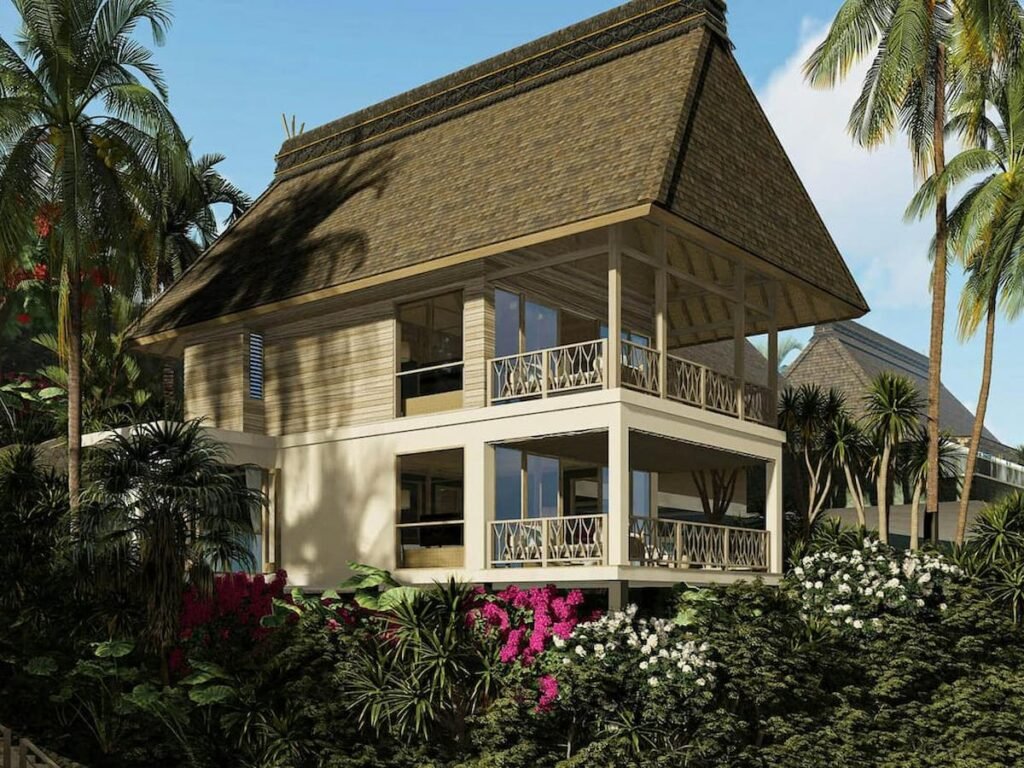
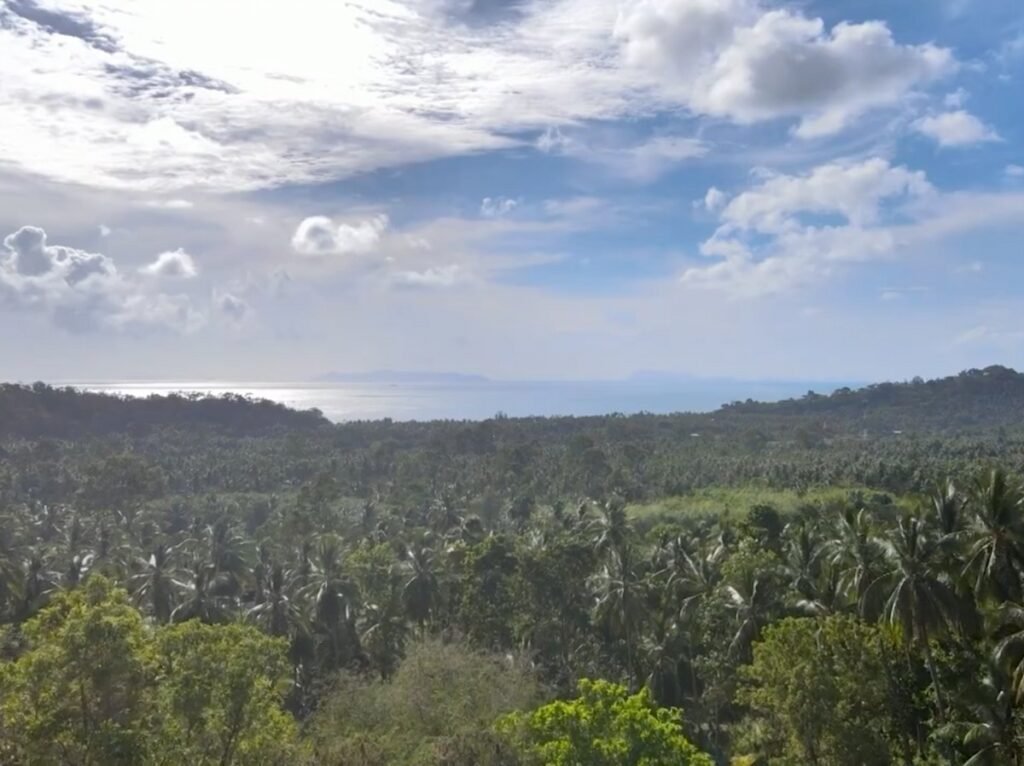
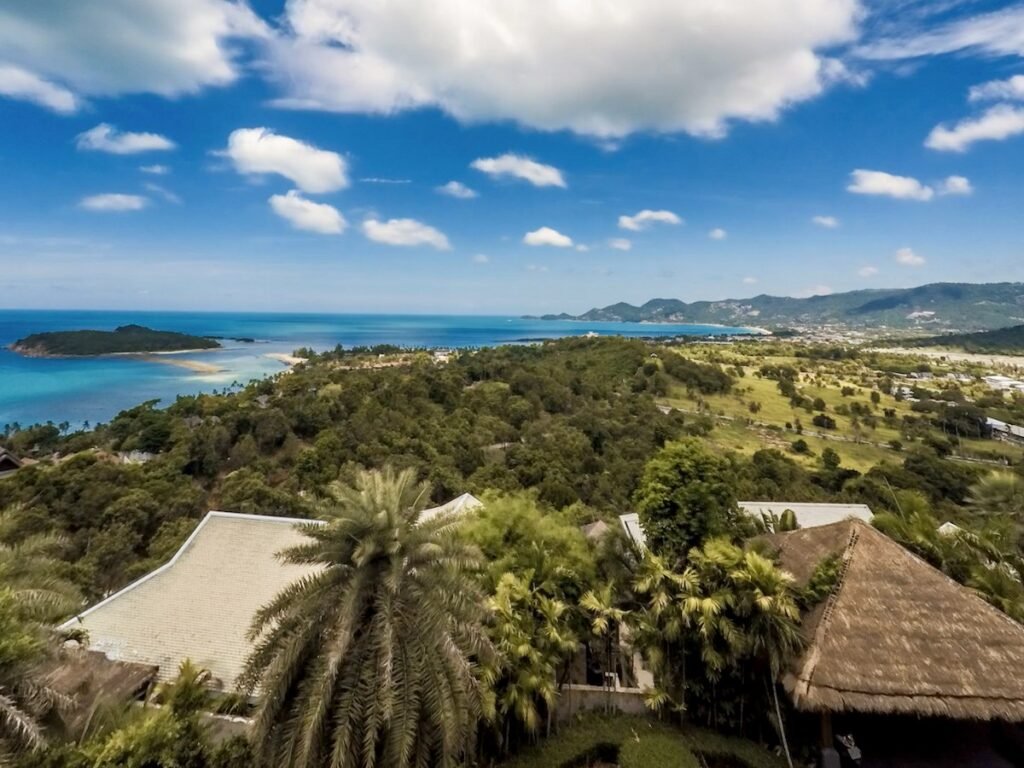
The Bophut Hills climb behind the bay, holding what is now one of the most concentrated luxury hillside villa clusters on the island. Panoramic 180-degree views back across Bophut Bay and out to Koh Phangan, sunset visible over the north coast, and a road network that has improved considerably over the past five years. Developments like The Summit, Atulya Residence, Purana, and Kalya sit in this band, with prices reflecting the view quality. The May 2025 hillside rules apply here.
What good Bophut design has to handle
Bophut’s beach faces north, which is unusual on the island and a genuine design advantage. The morning sun rises over the sea to the east, the afternoon sun sets to the west, and the building catches indirect light from both directions without the brutal east or west exposure that defines other parts of Samui. North-facing terraces and pools work well in this orientation, with the sun moving around them rather than directly into them. The view across the bay to Koh Phangan is in front of you all day and changes character as the light moves.
The hillside above the village shifts the orientation conversation slightly. Plots on the Bophut Hills typically face north or northwest, with the view captured across the bay rather than along the coast. The afternoon sun on west-facing rooms still needs proper shading, but the dominant view direction usually sits north. Designs benefit from being arranged with their long axis along the contour of the hill, with the building’s social spaces facing the view and the back-of-house tucked into the slope behind. Hillside foundations are on weathered granite with bedrock close to the surface, which is forgiving for bearing capacity but limits cut-and-fill operations to the standard 2-metre maximum on slopes above 35 degrees.
The northeast monsoon hits the coast from November through January. Drainage on the flat strip needs to handle real storm volumes, particularly during November when rainfall is at its heaviest. The hillside drains better but suffers from runoff scour during peak rains, and surface water management on the slope is a structural design issue rather than a finishing detail.
Acoustic specification in central Bophut is different from Chaweng. The village closes around midnight, has no nightclubs, and the noise profile is restaurant chatter and live music rather than full club volumes. Standard double glazing and decent wall construction is sufficient for any building more than fifty metres from the walking street. Properties on Beach Road itself need slightly more careful treatment, particularly on Friday nights when the walking street market runs the length of the road.
The T-junction problem and access design
The T-junction where the Bophut access road meets the Ring Road backs up significantly at peak times, particularly during high season. For a residential project, this is an inconvenience. For a commercial project that needs deliveries, taxi pickups, or guest arrivals during peak hours, it is a genuine design constraint.
The architectural response is to think about access carefully at the brief stage. Plots that have alternative access via the back roads inland (linking through to Maenam or Bangrak) are more valuable than they look. Driveway and arrival sequences on hillside plots benefit from being designed with peak-hour patience in mind, with proper turning circles, secure parking off the public road, and where possible a gated arrival sequence that does not back the property out onto the busy road network.
Boutique resort and serviced apartment briefs need to account for delivery scheduling around the peak congestion windows. Service yards that work at 7am may be unworkable at 7pm, and a building designed without that distinction will struggle operationally.
Lifestyle and infrastructure
Bophut has the most balanced infrastructure of any area on the island. Mains water, three-phase electricity, fibre internet, proper sewerage. The Wharf supplies day-to-day groceries and essentials, with the larger Big C and Lotus’s a short drive towards Chaweng. The international schools cluster on the north coast is genuinely close (10 minutes), making this one of the best areas for families with school-age children. The airport is 15 minutes by road. Chaweng, Bangrak, and Choeng Mon are all within a 10-minute drive.
The community in Fisherman’s Village itself is more international than most of Samui, with a long-settled expat layer, a working hospitality workforce, and a Thai population that runs the village’s older businesses. The hillside is more residential, with a mix of permanent residents and second-home owners. The vibe is upmarket but unpretentious, settled rather than transient. The Friday walking street market remains the village’s civic anchor, drawing visitors and residents to the same place at the same time.
For families, Bophut is one of the best choices on the island. For long-term residents, the balance of amenity, beach quality, and access is hard to beat. For investors, short-stay rental yields are reliably strong, and mid-stay tenant demand is consistent year-round. The friction points are mostly access-related: the T-junction, peak-hour congestion, and the increasingly busy Friday markets.
A practical sequence for a Bophut plot
The standard sequence applies. Confirm the Chanote, check boundaries against the ground, verify zoning under both the older planning maps and the May 2025 environmental zones, check altitude and slope on any hillside plot, confirm distance from the high-tide line for anything coastal, then commission soil and drainage assessments before feasibility design begins.
The Bophut-specific things to watch for are the village conservation expectations (any plot in or immediately adjacent to Fisherman’s Village will face informal pressure to retain low-rise character even where zoning would technically permit more), access from the T-junction during peak hours (worth visiting at 6pm before committing), and the May 2025 environmental layer for any Bophut Hills plot.
Final note
Bophut is the closest Samui has to an honest centre. It has the history, the tourism economy that respects it, the beach that makes living here worth the entry price, the hillside that holds the better residential architecture, and the access network that makes everyday life workable. It is also the place where the original village character has held on most stubbornly against the pressure to redevelop, which is both the area’s appeal and its genuine vulnerability. For the right brief, designed thoughtfully and built carefully, Bophut is one of the most rewarding places on Samui to put a serious building.
Considering land in Bophut, Chaweng, Choeng Mon, Bangrak, Lamai, Taling Ngam, Lipa Noi, Nathon, Bangpor, or Maenam? Get in touch for a preliminary land viability assessment. Don’ty forget to check out our Youtube Channel or Knowledge hub.
See also:
- Choeng Mon: building on Samui’s quieter luxury corner
- Bangrak: building under the flight path
- Chaweng: building in the commercial heart of the island
- Lamai: building on the east coast’s working alternative
- Nathon: building in Koh Samui’s old capital
Note on regulations: zoning, height, altitude, slope, and environmental protection rules are subject to change and to local enforcement variations. The 21 May 2025 Surat Thani environmental law in particular has introduced new restrictions that may not yet be reflected in older online guides. Always verify current rules with the Land Office and a licensed Samui architect or legal advisor before relying on this guide for any acquisition or build decision.