An architect’s guide to the island’s emerging coast, where the sunset is the design brief and the reef is the constraint.
Bang Por sits at the northwest corner of Koh Samui, four kilometres of coastline between the Ban Tai headland to the east and Laem Noi to the west, with Maenam on one side and Nathon on the other. It is one of the older parts of the island in a quiet way: some of the first luxury villa rentals built anywhere on Samui were on the Bang Por hillside in the early 2000s, before the development pressure shifted east towards Bophut and Choeng Mon. For two decades the area held its character partly because development moved elsewhere. Now it is moving back, and the recent property listings out of the Maenam to Bang Por corridor describe it as one of the most undersupplied premium markets on the island.
For a client weighing Bang Por, this matters. The area is not a discovery in the sense that nobody has built here before. It is a reset, with a new wave of contemporary tropical villa development going in alongside the older stock, and prices that still sit below the equivalents in Bophut or Choeng Mon. The trade-offs are real (the offshore reef changes what beachfront living looks like, the airport is further than the northeast, the amenities are limited) but for the right brief they are easily worth it.
Important update before going further
A new environmental protection law for Surat Thani Province came into force on 21 May 2025, applying to Koh Samui, Koh Phangan, Koh Tao, and surrounding islands. It introduces seven new environmental protection zones with significant new restrictions on hillside development.
The points worth knowing for Bang Por specifically:
- In the new hillside zones, only one single-family home is permitted per parcel, capped at 6 metres in height with 50% required green space
- Retaining walls and resort-style developments are no longer permitted in the affected hillside zones
- Land subdivision is prohibited in those zones
- On any sloped land at 35% gradient or above, special permission is required to grade or alter the terrain or remove large trees
Most of the flat coastal strip and the lower band of the Bang Por hillside sit below the 80-metre threshold and are unaffected by the new hillside-specific rules. Plots higher up the slope (some of which command the best Koh Phangan and Angthong Marine Park views) sit inside the new framework and need careful zoning verification before purchase.
The land, in three working zones
Bang Por splits into three useful zones for development.
The flat coastal strip runs along the four kilometres of beach, narrow in places and wider in others. This is where the rustic Thai beachfront restaurants sit, where the new beach club developments are clustering, and where the older mid-range bungalow resorts are starting to be replaced by contemporary villa product. Plots on this strip are generally yellow-zoned for low-density residential and tourism use, with the standard distance-from-beach rules applying.
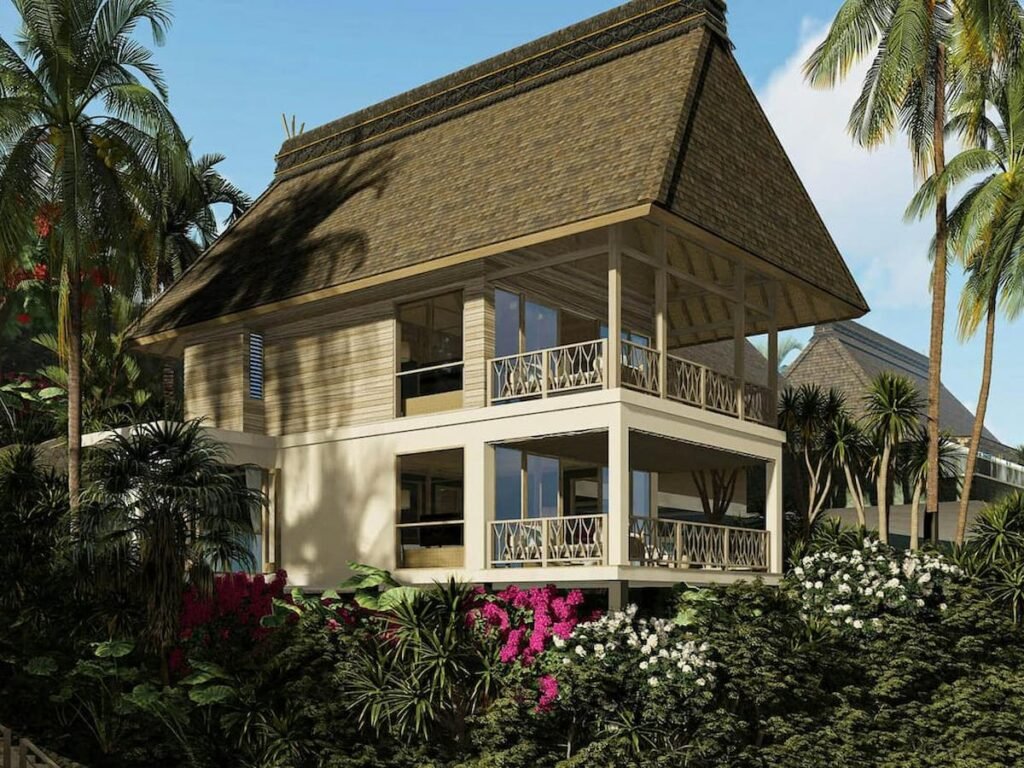
The middle band, set back from the beach but on flat or gently sloping land, is where most of the new villa product is going. Three-bedroom and four-bedroom pool villas at price points that compete favourably with the established northeast areas. The recent developments around the Maenam to Bang Por corridor (Coast Breeze, the Forbes & Partners projects with private beach clubs, Boho-style villa clusters in the coconut groves of Bang Po Village) are concentrated here. The Santi Thani estate on the inland hill is one of the established benchmarks.
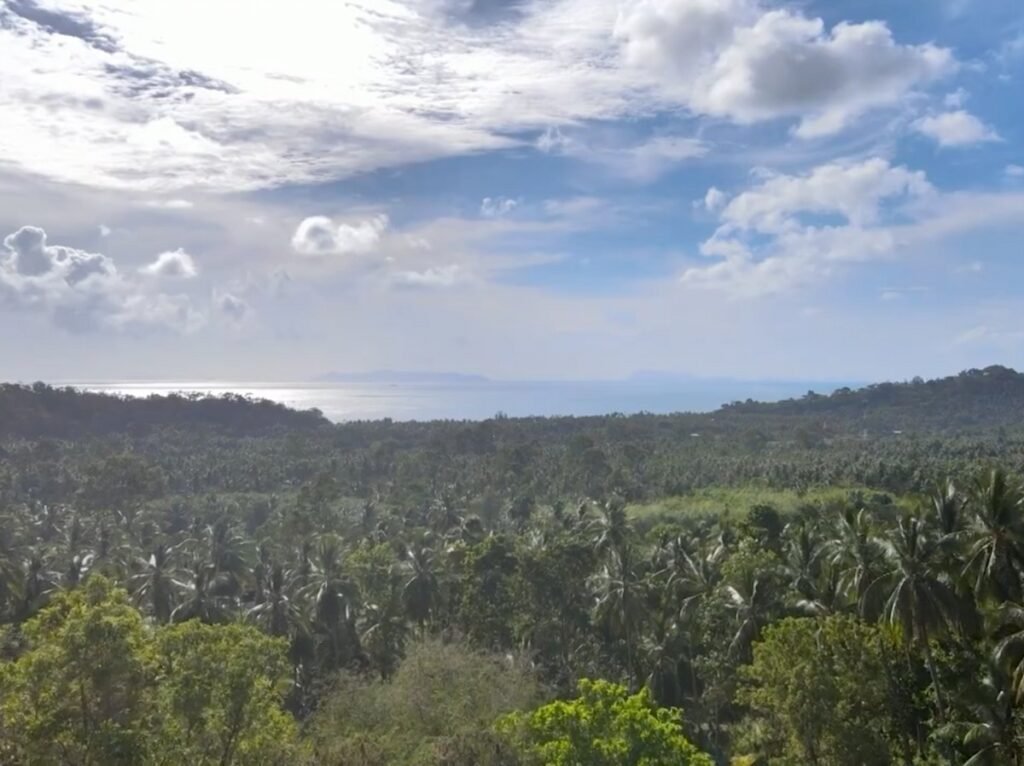
The Bang Por hills behind the coastal strip rise into a series of ridgelines that hold some of the best 180-degree views on the island. Koh Phangan to the north, the Angthong Marine Park further west, and on the higher ridges a view that sweeps from the islands across to the mainland on a clear afternoon. Some of the original 2000s luxury villa developments are up here, and the pipeline of new hillside product is reactivating those positions. The May 2025 environmental rules apply.
The reef changes the design brief
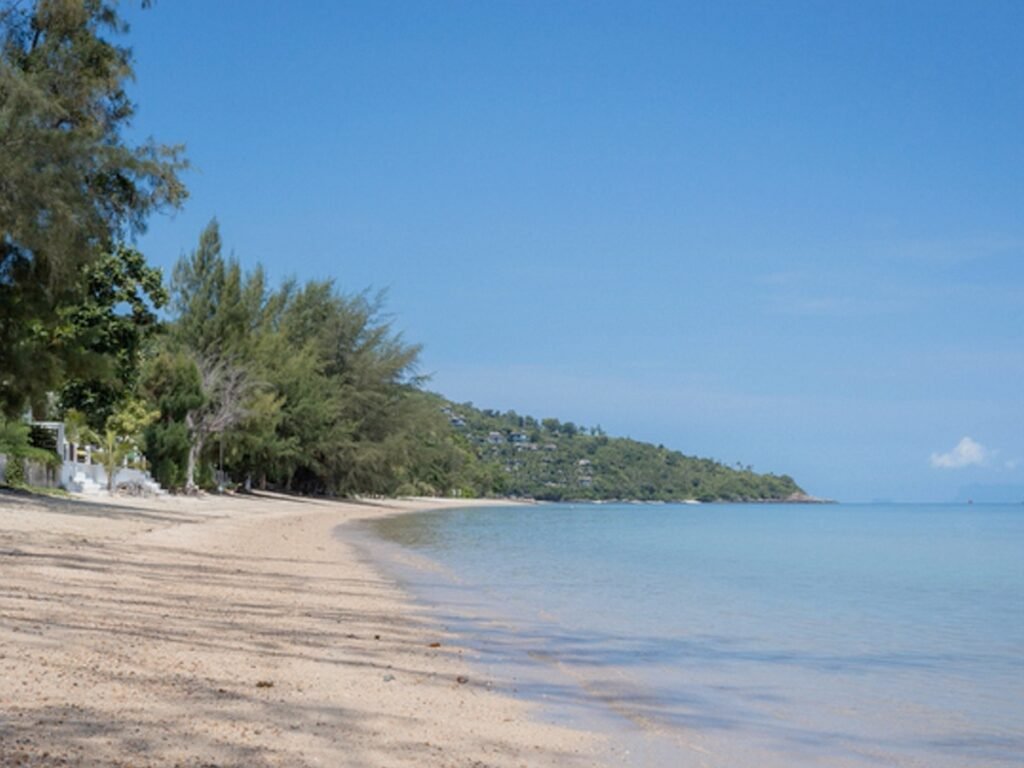
Bang Por shares a design feature that none of the other guides in this series have had to deal with directly: an offshore coral reef that runs along most of the bay and exposes during low tide in summer. Swimming is excellent from December through March when the tide stays in. From May through October the reef sits as a wide flat at low water, often a hundred metres or more from the high-tide line, which makes the beach look spectacular but unswimmable for parts of the day.
The architectural implication is real. A beachfront villa or pool deck designed around the assumption that you will walk straight from the property into water you can swim in will disappoint for half the year. Better Bang Por design treats the beach as a visual feature rather than a primary swimming amenity, with pool and deck design oriented for sunset and morning use rather than midday wading. A good private pool (cooled, shaded, well-positioned) becomes more important than direct beach swimming access. The new beach-club-attached villa developments work around the same constraint by providing curated swimming environments as a residential amenity.
For sea-view hillside villas, the reef is an aesthetic asset rather than a practical concern. The patterns of the exposed reef at low tide create some of the more striking landscape views on the island, and a hillside villa with a properly oriented terrace can capture this changing rhythm as part of the daily scenery.
What good Bang Por design responds to
Bang Por’s coast faces north-northwest. This is the gentler end of the west coast spectrum: the afternoon sun arrives but is less brutal than at Lipa Noi or Taling Ngam, and the sunset is genuinely one of the best on the island, sweeping across the Angthong Marine Park rather than dropping behind a single horizon line.
The standard west coast design discipline still applies but with slightly more flexibility. Glazing on the sunset elevation needs proper shading, but the orientation can be more generous than on the south-southwest coasts further down. Cross-ventilation works particularly well here because the prevailing southwest breeze hits the hillside and lifts predictably. Designs that use tall ceilings, high-level openings, and clear ventilation paths from the inland slope through to the seaward elevation perform well without heavy reliance on air conditioning.
The southwest monsoon hits Bang Por from May through October, with the heaviest rainfall in October and November. Drainage on the flat coastal strip is straightforward but worth getting right because the water table is shallow. Plots on the lower hillside drain better, but the slope-to-flat transition zone needs careful surface water management to prevent runoff scour during peak rains.
Geology is broadly similar to the rest of the west coast. The flat coastal strip sits on alluvial soils with limited bearing capacity at shallow depth, with pile foundations standard for two-storey work. The Bang Por hillside transitions to weathered granite with bedrock close to the surface, with cut-and-fill limited to 2 metres on slopes above 35 degrees. Several of the better hillside villas in the area work the slope into the architecture, with stepped concrete foundations cast against the natural topography and the building broken into pieces that follow the contour rather than fighting it.
Wind exposure is worth noting on the higher Bang Por ridges. The northwest position catches genuine wind during the southwest monsoon, and any high-elevation villa benefits from designed windbreaks (often planted rather than built) on the windward side. This is more an issue of comfort than of structural concern, but a verandah that is unusable in afternoon wind is a verandah that gets little use.
Lifestyle and infrastructure
Bang Por’s infrastructure is adequate for residential development but more limited than the northeast. Mains water reaches most areas but pressure can be inconsistent, particularly in the dry season. Three-phase electricity is available on most main-road plots; remote sites in the coconut groves may need new poles run in. Fibre internet has reached the main coastal strip and the village centres but is patchy further into the hills.
The road network is decent. The Ring Road runs along the coast and connects efficiently north into Maenam (5 minutes), east through Bophut towards Chaweng (25 to 30 minutes), and south into Nathon (10 minutes). The airport is around 30 minutes by road, which is the longest of any of the established residential areas on the island. For a primary residence this rarely matters; for a short-stay rental investment dependent on holiday arrivals, the transfer time is a real cost in guest experience.
Day-to-day amenities are limited. The Bang Por village strip has small Thai grocery shops and a handful of beachfront restaurants (Krua Bang Por, Bang Po Seafood, Lay Lagom, and the cluster of family-run Thai kitchens between Ban Tai and Laem Noi). For a full grocery shop, residents drive ten minutes to Nathon for the Lotus or fifteen minutes east into Maenam. International schooling is available on the north coast, around a 20-minute drive away.
The community is settled and quiet. Long-stay expat residents, retirees, families building primary or secondary homes, and a stable Thai population that has run the village’s older businesses for generations. The vibe is more rural than Bophut, with coconut groves still genuine rather than ornamental and a real sense that this part of the island has held on to something the busier areas have lost.
For a primary residence or a long-stay second home, particularly for a client who values quiet and is willing to drive for amenities, Bang Por is one of the better choices on the island. For a tourism-oriented short-stay rental, the airport distance and the limited amenity make the maths less favourable than the northeast, though the new beach-club-attached developments are partly closing this gap.
A practical sequence for a Bang Por plot
The standard sequence applies. Confirm the Chanote, check boundaries, verify zoning under both the older planning maps and the May 2025 environmental zones, check altitude and slope on any hillside plot, confirm distance from the high-tide line for anything coastal, then commission soil and drainage assessments before feasibility design begins.
The Bang Por specific things to watch for are reef exposure (visit the plot at low tide to see what the swimming reality actually is), wind exposure on higher hillside plots (visit during the southwest monsoon if possible), and the May 2025 environmental layer for any elevated land. The recent surge in beach-club developments has also created some clustering of supporting infrastructure, which is worth understanding when evaluating plots that benefit indirectly from these amenities.
Final note
Bang Por is the part of the island that suits clients who value the long view over the immediate convenience. The amenities are thin, the airport is further, and the swimming is seasonal. In return, the land is more generous, the views are unmatched, the community is settled in a way that is becoming rare on Samui, and the architectural opportunity is genuine. For a primary residence, a serious second home, or a quiet investment in an undersupplied premium market, Bang Por is one of the more rewarding briefs on the island right now.
Considering land in Bang Por, Bophut, Chaweng, Choeng Mon, Bangrak, Lamai, Taling Ngam, Lipa Noi, Nathon, or Maenam? Get in touch for a preliminary land viability assessment. Check out our Youtube channel or our Knowledge hub for more invaluable insights.
See also:
- Nathon: building in Koh Samui’s old capital
- Lipa Noi: building on Samui’s quiet southwest
- Bophut: building in Samui’s original village
- Taling Ngam: building on the Virgin Coast
- Choeng Mon: building on Samui’s quieter luxury corner
Note on regulations: zoning, height, altitude, slope, and environmental protection rules are subject to change and to local enforcement variations. The 21 May 2025 Surat Thani environmental law in particular has introduced new restrictions that may not yet be reflected in older online guides. Always verify current rules with the Land Office and a licensed Samui architect or legal advisor before relying on this guide for any acquisition or build decision.